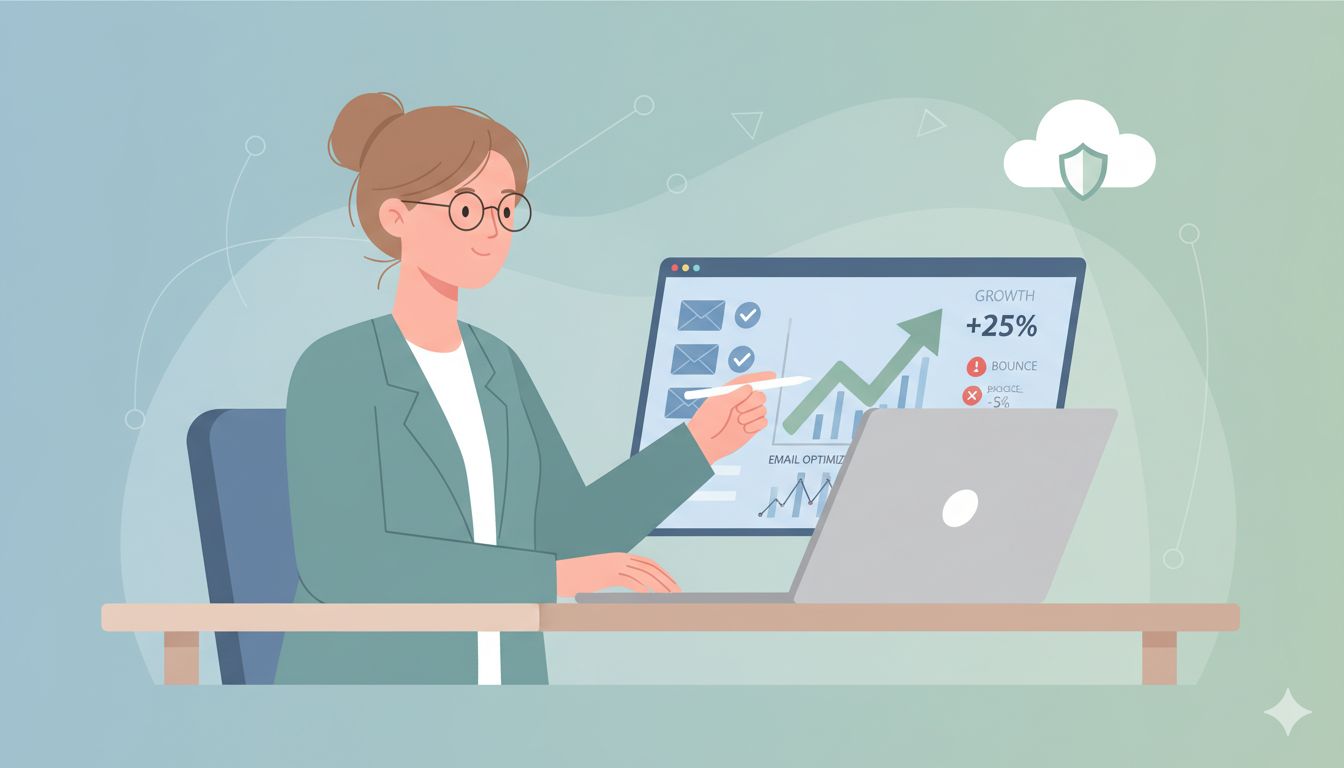
You work hard to win subscribers. Yet bad data creeps in. Typos. Abandoned inboxes. Spam traps you never meant to hit. Email list cleaning fixes that. It protects your domain, lifts inbox placement, and boosts revenue per send. We do this work daily and know the pitfalls to avoid.
Here, you learn the exact checks to run, the cadence that works, and the tools that save time. We keep it practical. Short steps. Clear tests. Real outcomes. By the end, you will know how to clean safely, measure ROI, and keep your list healthy without risking your reputation.
Why Clean Your Email List? The Real-World Upside
You want reliable inboxing and steady revenue. Clean data is how you get both, without sending harder or louder.
Protecting Your Sender Reputation, One Send at a Time
Mailbox providers watch every send. Hard bounces, spam complaints, and low opens tell them your mail is risky. That lowers your domain and IP reputation. With hygiene, you cut dead addresses, reduce complaints, and keep engagement strong. Your reputation stabilizes, so future sends score better.
Inbox Placement, Not Just Delivery
“Delivered” can still land in spam. Inbox placement is the goal. When your list is clean, engagement rises and negative signals drop. Providers reward that with more primary inbox slots. You see higher reads and real reach.
Revenue Per Send, Not Just List Size
Big lists can be expensive and underperform. Clean lists focus your budget on people who can buy. That lifts RPM and EPS because each send hits more receptive inboxes. Fewer bad contacts. More qualified clicks. Better conversion per thousand.
When Should You Clean? Timing That Actually Works
You do not need to clean daily. You need to clean when risk and volume say so.
Tell-Tale Signals Your List Needs Attention
- Bounce rate creeping above your baseline
- A surge of dormant signups after a promo
- Imports from events, partners, or new forms
- Domain change, ESP migration, or DNS updates
If these pop up, schedule a batch validation and segment review.
Smart Cadence by List Type
- High-frequency newsletters: light hygiene monthly, deeper quarterly
- Sporadic senders: validate before each major campaign
- After lead-gen spikes: validate the new cohort within 48–72 hours
- Post-migration: run a full audit and reactivation flow before resuming scale
Close each cycle by checking bounce, complaint, and read rates. Adjust the cadence to match your risk and growth.
What Exactly Gets Cleaned? Breaking Down the Bad Addresses
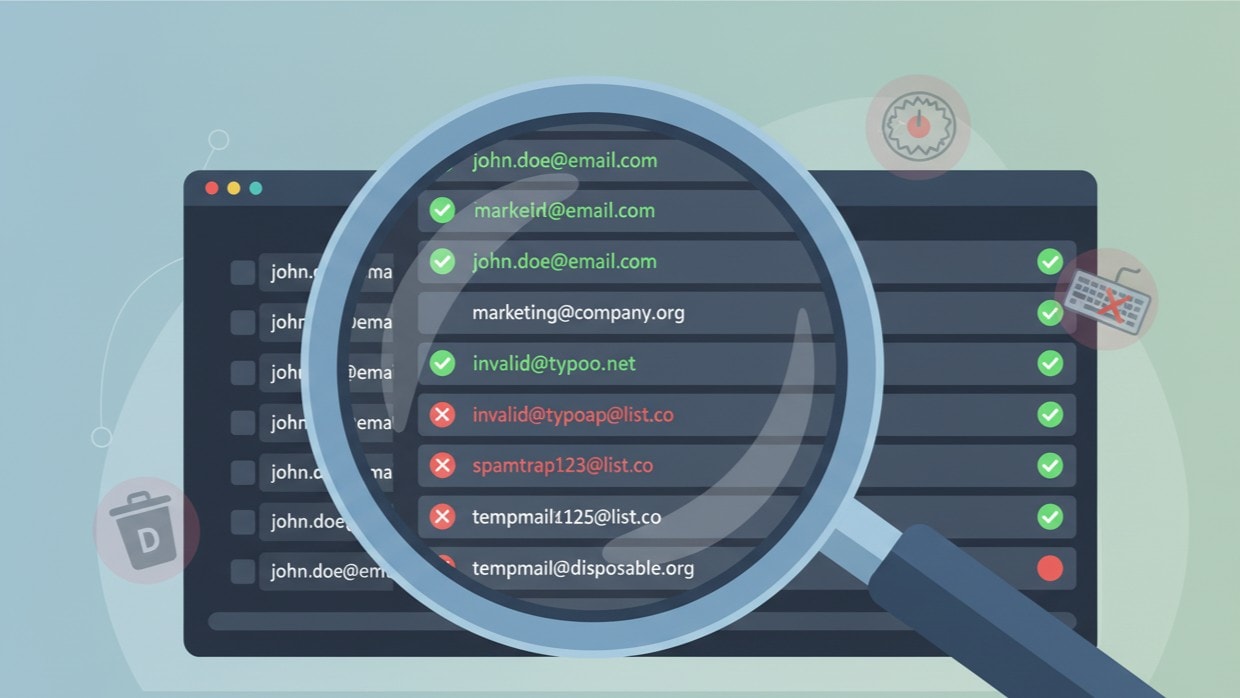
You clean for clarity. You want a list that works hard and stays safe.
Hard Bounces, Soft Bounces, and Typos, Oh My
Hard bounces signal invalid email addresses. Soft bounces point to temporary issues. Typos break perfectly good email addresses with small mistakes like missing dots or swapped letters. Some domains are catch-all and accept everything, so you still need extra checks. Others hide errors behind syntax slips. Disposable emails often look fine but expire before your next send, which makes emails bounce and skews your performance.
Risky Addresses You Don’t Want to Touch
Role accounts attract complaints. Spam traps, both pristine and recycled, exist to flag senders who do not practice list hygiene. Honey pots do the same and feed blocklists. These bad emails hurt email deliverability and push good mail toward the spam folder.
Engagement-Dead vs. Engagement-Light
Not all quiet contacts are equal. Truly dead records never open or click. Engagement-light contacts show rare activity and may respond to a smart nudge. Clean these groups differently to protect your clean email list without losing potential value.
How Do You Clean It? DIY, Validation Tools, and Automation
You want a simple, reliable system. Start small. Then automate the parts that never change.
Manual Fixes That Still Punch Above Their Weight
Use double opt-in on key forms. Add confirmation pages with typo prompts. Segment before pruning so you protect your contact list. For sensitive audiences or cold email outreach, write clearer email content and set expectations. These steps help you save money because you focus on people who care and reduce costs tied to large lists.
Validation APIs and Batch Jobs Without the Headaches
Pair an email verification service with practical email verification tools. Run email verification on aged cohorts, and schedule bulk email verification for bulk lists. Good providers offer real-time verification, email scoring, and deliverability tools. Many plug into your email marketing platform and improve data management. Add inbox placement testing, DMARC monitoring, and security reviews to keep the pipeline healthy and gdpr compliant.
Automation Playbook That Protects Your Email Campaigns
Enable real-time email verification for new users. Verify imports before sending emails. For ongoing email campaigns and marketing campaigns, use rules that suppress risk, honor unsubscribe, and promote valid emails. Track open rates and click-through rates so messages reach the right target audience and customers. Adjust cadence as users respond.
Data Protection and Compliance You Can’t Ignore
You need clean lists and clean practices. Treat privacy as part of the email cleaning plan, not an afterthought.
Doing Hygiene the Right Way, Legally
Get consent you can prove. Pick a lawful basis and document it. Honor unsubscribe preferences across every system and campaign. Remove obviously invalid addresses during the cleaning process to reduce risk.
Privacy and Security Basics
Collect only what you use. Encrypt data in transit and at rest. Sign vendor DPAs and verify their controls. Map the process so you can answer who had access, for what purpose, and until what date.
Regional Nuances
Follow CAN-SPAM for identification and opt-outs. Meet GDPR requirements for consent, purpose limits, and user rights. Respect CASL’s express consent rules. Train your team. Test flows often. Keep records so auditors can connect actions to policy without guesswork.
Measuring ROI: Proving Hygiene Pays
You want proof that hygiene moves the needle. Measure output, not feelings, and tie it to revenue.
Metrics That Matter Beyond Bounce Rate
Track inbox placement, read rate, unique clicks, and conversion per 1,000 sends. Watch how far your emails reach compared to prior baselines.
Attribution Without the Hand-Waving
Run pre- and post-cohorts. Hold out a small control that skips cleaning. Compare revenue per active subscriber and list churn. Reclassify inactive subscribers after a fair reactivation attempt so the analysis stays honest. Use practical marketing tools to tag sources and automate reports.
Payback Windows You Can Expect
Most programs show a signal within two to four sends. Revenue lift typically appears once you align targeting and cadence. Include vendor costs, including any custom pricing, in your model. If a provider offers free credits, test on a real campaign. Then adjust your marketing strategy with data, not hunches.
Common Pitfalls to Avoid (So You Don’t Undo the Good)
You can clean well and still trip yourself up. A few avoidable mistakes cause most setbacks.
Don’t Prune Before You Try to Revive
Give quiet subscribers a short, respectful reactivation sequence. Sunset only after fair tests.
Don’t Mix Consent and Validation
Validation checks data quality. Consent governs permission. Never re-add suppressed records because they passed a check.
Don’t Ignore Source Hygiene
If forms allow typos or bots, you refill the bucket with bad data. Add CAPTCHA, confirm emails, and limit risky sources.
Don’t Skip Warmup After Big Changes
New domains or IPs need a controlled ramp. Pair clean lists with gradual volume increases.
Don’t Measure on the Wrong Window
Look at multiple sends, not one blast. Trend inbox placement and conversions over time, then adjust.
Choosing an Email List Cleaning Partner: A Practical Checklist
The right partner fits your stack, your risk level, and your growth plan. Here is how we vet vendors with clients.
Can They Prove Accuracy
Ask how they detect traps and risky patterns. Seek evidence from test cohorts, not vague claims.
Do They Secure Your Data
Look for clear data flows, short retention, and signed agreements. Verify encryption and access controls.
Will It Fit Your Workflow
Check native integrations with your ESP and CRM. Confirm support for batch jobs and real time checks.
Is the Pricing Predictable
Understand tiers, minimums, and overage rules. Model costs for your typical month and your busiest month.
Can You Test Before You Commit
Request a sample audit on a small segment. Compare pre and post results on deliverability and revenue. Keep a control group to confirm lift is real.
Make It Stick: Your 30-Day Hygiene Plan
Set a simple plan. Execute for four weeks. Lock in what works.
Week 1: Baseline and Form Fixes
Record current bounce, complaint, read, and revenue metrics. Add typo prompts and confirmations on sign-up forms.
Week 2: Segment and Validate
Validate older cohorts. Split risky from revive-ready segments. Queue a gentle reactivation for the latter.
Week 3: Automate and Protect
Turn on nightly jobs. Enforce pre-import checks. Define suppression rules and routing for risky addresses.
Week 4: Measure and Tune
Compare against Week 1. Adjust cadence, segments, and thresholds. Write a one-page SOP so your team can repeat the process without drift.
Email List Cleaning Services: The Payoff of a Clean List
You clean your list to make every send count. The upside is real. Fewer bounces. A stronger reputation. Better inbox placement. Higher revenue per send. You work with focus instead of fighting fires.
Start today with a quick baseline audit. Capture your current bounce, complaint, read, and revenue metrics. Then run a small validation batch on a sample segment. Compare results after two sends. Keep what lifts performance and drop what does not.
If you prefer a done-for-you path, our email list cleaning service can handle validation, automation, and privacy guardrails, quietly behind the scenes, so your email campaigns simply perform better.