
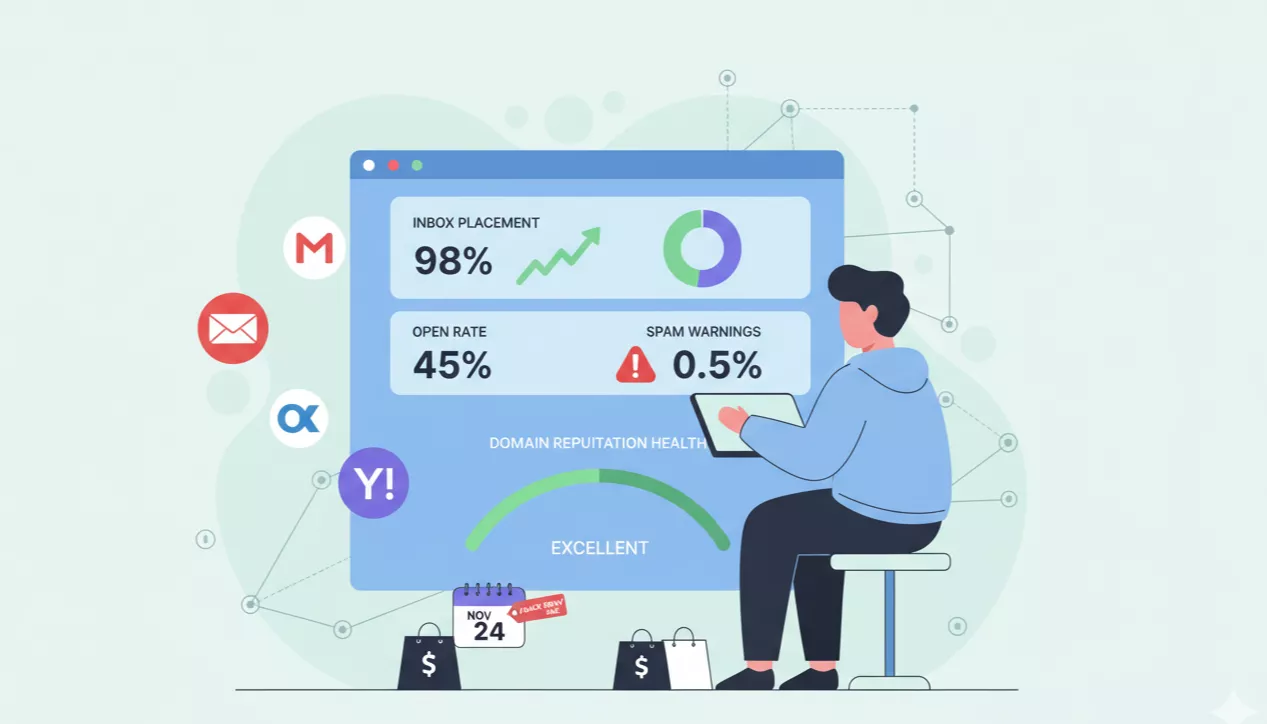
Black Friday can be brutal for email deliverability. You send your best offers, but they vanish into spam or Promotions while competitors win the sale. It feels random, but it is not. Inbox providers are judging your domain long before the big weekend.
The good news is that you can influence that judgment. When you understand how reputation really works, you can prepare, not panic. In this guide, we will walk through practical steps you can take now so your Black Friday campaigns actually reach people who want to buy from you. That is where we will focus together today.
See Black Friday From The Inbox’s Point Of View
Before you plan creative or discounts, it helps to see Black Friday the way filters see it. We care about revenue. Mailbox providers care about protecting their users.
What Inbox Providers Notice Before Anything Else
Inbox providers track patterns over time, not one big blast. Your logo matters less than how your email marketing behaves.
They care about:
- How often you send
- How your volume changes week to week
- How people react, including opens, clicks, and spam complaints
- Whether past messages from your domain caused problems
All of this rolls into your sender reputation. When that story looks steady and predictable, you earn trust. When it looks jumpy or desperate, you look risky.
Why Black Friday Traffic Looks Risky From Their Side
Around Black Friday, every email provider sees floods of promos and more abuse. Filters tighten and become cautious.
So when you suddenly:
- Double or triple your sending volume
- Add a pile of new, untested contacts
- Push hard urgency in every set of subject lines
you can resemble the senders filters are built to block. Even if you run legitimate black friday email campaigns, the pattern can still look suspicious.
How A Weak Reputation Shows Up For Your Customers
Problems usually start before the big weekend, then spike right when you need results.
You see weaker inbox placement and slipping open rates. Your customers see:
- Emails sent to Promotions or the spam folder
- Delays that make offers land too late
- Important messages that never appear at all
Once you see their side, you can act early so inbox placement rates move in your favor before the rush.
Tidy Up Your Sending Infrastructure Before The Rush
Now that you understand how strict filters can be, we need to make sure your setup is not giving them extra reasons to doubt you. A few quiet fixes here protect every big send later.
Lock In The Essentials So You Look Legit
You do not need to be an engineer for this. You just need the right basics and a simple email strategy.
Double check that:
- SPF is correctly set for all your email service providers
- DKIM signs from the same domain people see
- DMARC has a policy that matches your risk tolerance
These records help modern email platforms decide how to treat you. Deliverability, security, and bounce rate all start here.
Then improve list hygiene on the technical side. Remove obvious typos, role accounts, and invalid addresses. If you have never done this at scale, an email list cleaning service or strong internal list cleaning can prevent painful bounce rates in peak periods.
Decide If A Dedicated Sending Domain Fits You
If you send a lot of promotional emails, it often helps to separate them from more sensitive traffic.
You might:
- Use one subdomain for campaigns
- Keep transactional emails on a different subdomain
- Reserve your main corporate domain for internal mail
This way, your core brand keeps a steady sending reputation even if one major campaign struggles. Critical items like password resets or order confirmations are less likely to suffer when marketing has a bad day.
Warm Up Gradually So Black Friday Is Not A Shock
Inbox filters like steady patterns, not sudden spikes. Warming up shows that higher volume is normal for you, not a brand-new spam operation.
In the weeks before Black Friday:
- Start with recently active people
- Increase volume step by step
- Watch simple email metrics so you can react early
If you can, combine warm-up efforts with email verification, checks for spam traps, and basic spam trap detection. That keeps invalid contacts away while your email program ramps up, so your email platforms see you as safe at the exact moment you need reach.
Fix Your Lists So You’re Not Emailing Ghosts
Your infrastructure is now in better shape. Next, we need to look honestly at who you are sending to so you are not burning reputation on people who never respond.
Spotting The Risky Addresses Hiding In Your Email Marketing Lists
Every list has dead weight. You probably have inactive subscribers who have not opened in months, plus random signups that were never real fans in the first place.
On top of that, many databases are full of small technical risks. Things like typo domains, role addresses, and duplicate emails create extra bounces and noise. They waste volume that could be going to people who actually want to hear from you and they quietly drag down your reputation over time.
Designing A Re-Engagement Campaign Before You Hit Delete
Before you remove anyone, give them a fair last chance.
Plan a short re engagement campaign with plain, honest copy. Tell people why you showed up, remind them what value they signed up for, and offer a clear choice to stay or go. This is where you can use simple holiday emails to tease upcoming offers without turning up the pressure too early.
If you want quick tips, keep it to one clear message, one simple CTA, and one weekend to respond. That is often all you need to re engage inactive subscribers who still care.
Segmenting Out Long-Silent Contacts Before They Hurt You
Some people will stay silent even after a gentle nudge. That is okay, but you should not treat them like your engaged audience.
Create segments for inactive users and other unengaged subscribers based on engagement metrics such as recency of opens and clicks. Most brands avoid hitting these people with every big push because data shows they rarely buy yet still affect reputation.
Creating Smart Suppression Rules And When An Email List Cleaning Service Helps
Strong rules make it easier to protect reputation when you get busy.
You can tune suppression based on channel preferences and the intensity of each campaign. For example, keep your most aggressive pushes away from anyone who has not opened in a long time or who only responds on their preferred channel.
Add a simple flow where people who stop engaging move into a low-frequency pool or to a win-back path driven by focused landing pages. Watch the conversion rates on those journeys and use the granular insights to make more informed decisions about who you keep and who you finally remove.
Send Like A Human, Not A Firehose
Now that your list is cleaner, we can focus on how you show up in the inbox. The goal is to feel like a helpful person arriving at the right moment, not a flood of noise during the busiest week of the year.
Choosing A Sending Cadence That Does Not Freak Out ISPs
Think about the full holiday season, not just one blast on the big day.
Plan your rhythm across Black Friday, cyber week, and the days that follow. Space out your sends so each message has room to breathe. Tie volume to your actual promotions and expected online sales, not just habit.
When your pattern looks calm and intentional during heavy holiday shopping, filters relax and your messages have a better chance of landing where they should.
Segmenting By Intent So Your Email Campaigns Feel Timely
Segmentation is where good email marketers separate themselves. If you work as an email marketer inside a busy team, this is your biggest lever.
Use behavioral and interest data from your broader digital marketing stack to decide who gets what. People who browse gift guides might get early access to curated bundles. Loyal buyers might see fewer discounts and more engagement through sneak peeks or loyalty perks.
This kind of targeting helps each person feel like you thought about them before you hit send.
Writing Emails That Earn The Right To Be Opened
You cannot force clicks, but you can earn attention.
Build sequences where the value is obvious in a few seconds so click through rates stay healthy. Keep copy honest and specific so you do not need tricks.
Mix promotional pushes with helpful content, transactional messages like reminders and updates, and simple check-ins. Include useful details such as shipping updates when they matter. That balance improves campaign performance and supports a smoother customer experience.
When you align tone and timing with what people expect, deliverability experts see the same pattern inbox providers do: a sender that respects attention and plays the long game.
Watch The Warning Signs And Adjust In Real Time
Even with a clean setup and smart sending, you still need to keep an eye on how inboxes react. This is where you move from guessing to steering your results on purpose.
Know Which Numbers Actually Signal Trouble
You do not need twenty charts. You need a small set of signals you trust.
Watch for:
- Sudden rises in hard or repeated soft bounces
- Spam complaints inching up, even a little
- Open and click curves dropping across several sends
- A gap between what you sent and what your platform reports as delivered
Look for trends over a few days, not single sends. If several signals move the wrong way at once, you know something is off.
Use Postmaster Dashboards Without Getting Lost
Tools from mailbox providers can feel intimidating at first. Treat them like a weather report, not a full-time job.
Check key panels during the run-up and across the Black Friday weekend. Focus on reputation, spam rate, and delivery errors. You are not trying to fix every blip. You only want to spot patterns early, so you can react before things get serious.
Have A Simple Emergency Plan Ready
When numbers slide, you do not want a long meeting. You want a short checklist.
For example, you might:
- Pause sends to low-engagement segments
- Reduce frequency for everyone except your best responders
- Temporarily send only your strongest, most expected messages
This gives inboxes room to reset while you protect revenue from your most loyal buyers.
Do A Quick Debrief While Everything Is Fresh
Once Black Friday, Cyber Monday, and the surrounding days are over, do not rush back to business as usual.
Take time to review what really happened. Which segments performed well? Which offers drove positive engagement? Where reputation dipped and how fast it recovered.
Capture these lessons in a simple playbook. Next year, you will not be starting from scratch. You will be starting from proof.
Email Deliverability: Black Friday & Your Domain Reputation
If you put this together, you are not hoping for good deliverability. You are building it. You understand how inboxes see you, you set up your domain correctly, you send to people who still care, and you respect their attention when you write and schedule campaigns.
That work keeps paying off after the sale is over. Your emails land more often. Your best customers hear from you when it matters. And when the next peak season comes around, we will refine, not rebuild, the system that protects your domain and your revenue.