
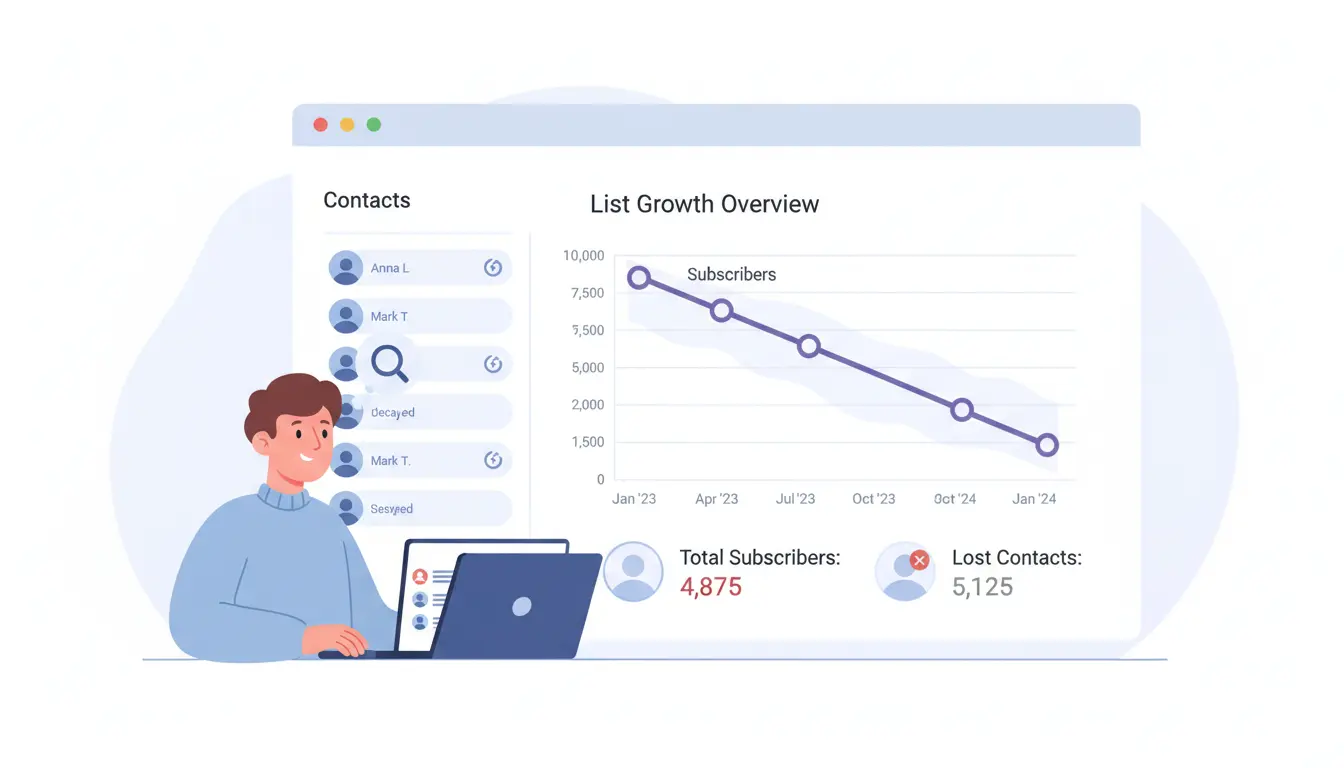
Your email list is growing, but your results are shrinking, and it feels confusing. You put in the work, people keep signing up, yet opens, clicks, and revenue slowly slide. That quiet decline is email list decay, and it affects every sender, no matter how skilled.
The good news is that decay is not random. There is a clear mix of human behavior, inbox logic, and data quality behind it. In this guide, we will unpack how decay really works and what you can do, step by step, to slow it down before it hurts growth and long-term revenue.
Why Email Lists Don’t Stay Fresh Forever
Email lists look solid in a spreadsheet, but they are constantly shifting in real life. Even if you paused email campaigns today, people’s work, interests, and tools would keep changing.
Let’s Get Clear On What Email List Decay Actually Means
When we talk about email decay, we mean the slow loss of real value in your list. It is not just people clicking unsubscribe. It is also invalid email addresses, old addresses, and email contacts that stop engaging.
Some addresses stop working. Others belong to people who still exist, but who never see you in a crowded inbox. They still count as users in your tool, but they no longer act or buy.
Normal Churn Vs. A Problem You Actually Need To Fix
Some loss is normal. People switch roles, change companies, or retire email accounts. Those contacts were once accurate data, but they quietly turn into obsolete data.
You also pick up poor-quality data. Think of rushed registration forms, typos, or disposable email addresses used just to grab a download. If you never clean this up, a large portion of your list was never really healthy.
A simple email list decay report, even if it is just a quick internal review, shows whether things are stable or sliding.
How Fast Do Lists With Disposable Email Addresses Decay?
Most lists lose value every quarter.
Solo business owners feel it when opens dip even while subscribers climb. Bigger teams see it when sales reps notice that contact details from the list no longer match real conversations.
The Science Of Why Subscribers Quietly Disappear
Decay often feels random, but clear patterns explain why people stop opening, clicking, or buying. When you see those patterns, it gets much easier to design around them instead of guessing.
How Life Changes Pull People Away From Your Emails
You live inside your brand; your subscribers do not. They change roles, move teams, or switch industries. Frequent job changes are common.
Each move takes your messages further from their day-to-day reality. A contact who once loved your content may now use different tools, delegate their inbox, or log in far less often. Over time, you see more invalid addresses and silent drop off in that group.
Attention Economics: Your Emails Compete With A Noisy Inbox
Every inbox is a crowded attention market. People skim subject lines and decide in a moment what deserves a click.
If your topics blur into everything else, your emails lose. You compete with internal updates, social alerts, system messages from email service providers, and a flood of other promotional messages.
When a message feels vague or low-value, it is easy to skip. Repeat that pattern enough, and you grow a pool of unengaged subscribers who stay on your list but never interact.
Psychological Friction: When Your Emails Feel Like Work
People avoid anything that feels like effort at the end of a long day. Complex layouts, long text, or unclear actions turn a quick read into a task.
That friction trains people to scroll past your name. Click-through rates fall, even when your offers would help.
Technical Reasons You Lose Subscribers Without Noticing
Some disappear for reasons that have nothing to do with your copy. Inbox providers and email providers use engagement to decide what reaches the main tab.
Invalid emails, spam traps, and hard bounces creep in, especially when you collect addresses through older forms or events. What looks like a growing list can hide a growing challenge under the surface.
How Decaying Email Data Messes With Your Metrics
Once decay sets in it does more than shrink your audience. It quietly distorts the numbers you rely on.
Why Your Open And Click Rates Start Lying To You
Every send goes to a mix of active and inactive people. As more of that audience slips away, your averages sink.
From the outside it can look like your content stopped working, when a growing share of your marketing efforts actually lands with people who never see or care about it. Over time, revenue per send can fall even as subscriber counts rise.
The Deliverability Domino Effect You Rarely See Coming
Mailbox and internet service providers watch how people react. If enough people stop opening, or drag you into spam, algorithms take that as a sign of low value.
That is where deliverability issues begin. More of your emails move into the promotions tab, the junk folder, or get blocked altogether. Include enough bad data in your sends, such as disposable emails or risky emails, or catch-all emails, and some systems treat you as a problem sender.
Over time, this shows up as poor deliverability and weaker reach, even to people who still want to hear from you.
The Real Cost: Wasted Budget And Blurry Revenue Forecasts
Behind the scenes, decay creates a long tail of wasted resources. You pay to store and message contacts who are no longer valid, yet they still appear in your dashboards.
That makes it harder to trust trends from the past year and plan accurately for growth. A cleaner list gives you sharper insight, which supports better decisions in every channel.
How To Tell If Your Email List Is In Trouble
You do not need a crystal ball to see trouble in your list. You just need to look honestly at behavior inside your email database and how it has shifted over time.
Simple Health Checks You Can Run This Week
Start with a simple snapshot of the last few months. Look at opens, clicks, and bounce rate together, not in isolation.
If sends are steady but engagement slides, something is off.
Track how often people leave. A steady rise in spam complaints tells you your content, audience, or frequency is misaligned.
Then count how many inactive subscribers have not opened or clicked within a time frame that makes sense for your business.
Finally, compare campaign performance month over month. If you keep sending similar messages to similar segments and results keep sinking, you are seeing early decay, not just a weak one off idea.
Reading Cohorts: When Did Engagement Start Slipping?
Group recent email addresses by the month or campaign where they joined.
Check how long each group stayed active and when their behavior began to fade. This is where you spot which sources or promises bring in people who never really connect.
Comparing Segments: Who’s Still In Love With Your Emails?
Now compare high activity segments with weaker ones. Look at purchase history, interests, and lifecycle stage.
Strong segments tell you what to protect and repeat. Weak ones highlight where email data decay is already costing you attention and revenue.
Practical Ways To Slow Down Email List Decay
Once you can see the shape of the problem, you can start fixing it. The goal is not a perfect list. The goal is a system that quietly supports your wider marketing strategy every week.
Start With The Promise: Set Expectations From Day One
People stay longer when they get what they expected.
Make your opt-in copy clear about what you will send, how often, and who it is for.
Show new subscribers early that you respect their time. Send a short welcome that delivers a quick win or a useful resource.
You are training them to look out for you, which lifts email engagement before anything else.
Test how often you are sending emails. Many lists perform better when you cut noisy sends and keep the strongest ones.
Make Every Send Earn Its Place In The Inbox
Before each send, ask a hard question.
What clear problem does this email solve for a reader today?
Focus on sharp, specific topics instead of broad updates.
Keep your call to action simple so people do not have to work to see the next step.
Use Segmentation And Personalization Without Going Creepy
Segment by behavior, product interest, or lifecycle stage rather than guesses.
Show people content that reflects what they clicked, downloaded, or bought, not what you wish they liked.
Keep personalization grounded in value. Use it to surface better ideas, not just to insert names.
Build Lifecycle Flows That Catch Decay Early
Set up basic flows that react when behavior changes.
A gentle reminder after a few quiet weeks can bring someone back before they disappear.
Use a reengagement series for people who slow down, then move them into lighter sending if they stay quiet.
Practice Ongoing List Hygiene (Without Panicking)
Treat maintenance as ongoing email hygiene, not a dramatic purge.
Over time, some contacts will stop responding even if they started as valid email addresses.
Schedule regular email validation on segments that worry you, such as older signups or risky lead sources.
If your list is large, use planned bulk email validation so you keep things clean without constant manual effort.
Healthy maintenance supports strong email deliverability and protects your sender reputation.
Every few months, remove inactive contacts from your main sends. This is one area where simple automated tools can save you a lot of time and second-guessing.
Wrapping It Up: Keeping Your Email List Truly Alive
Email list decay will always exist, but it does not have to control your results. When you watch the numbers, keep data clean, and respect attention, you prevent email list decay from quietly eroding your work.
Treat your list as a living asset inside your digital marketing, not just a static file.
As you do that, every step moves you closer to effective communication with people who actually want to hear from you.
You will see steadier results across your email marketing campaigns, and your future emails will have a real shot at being opened, read, and acted on. If you want extra help keeping data clean, a reliable email verification service can quietly support everything in the background.